
Happy Lammas.
How cows made Cambridge.

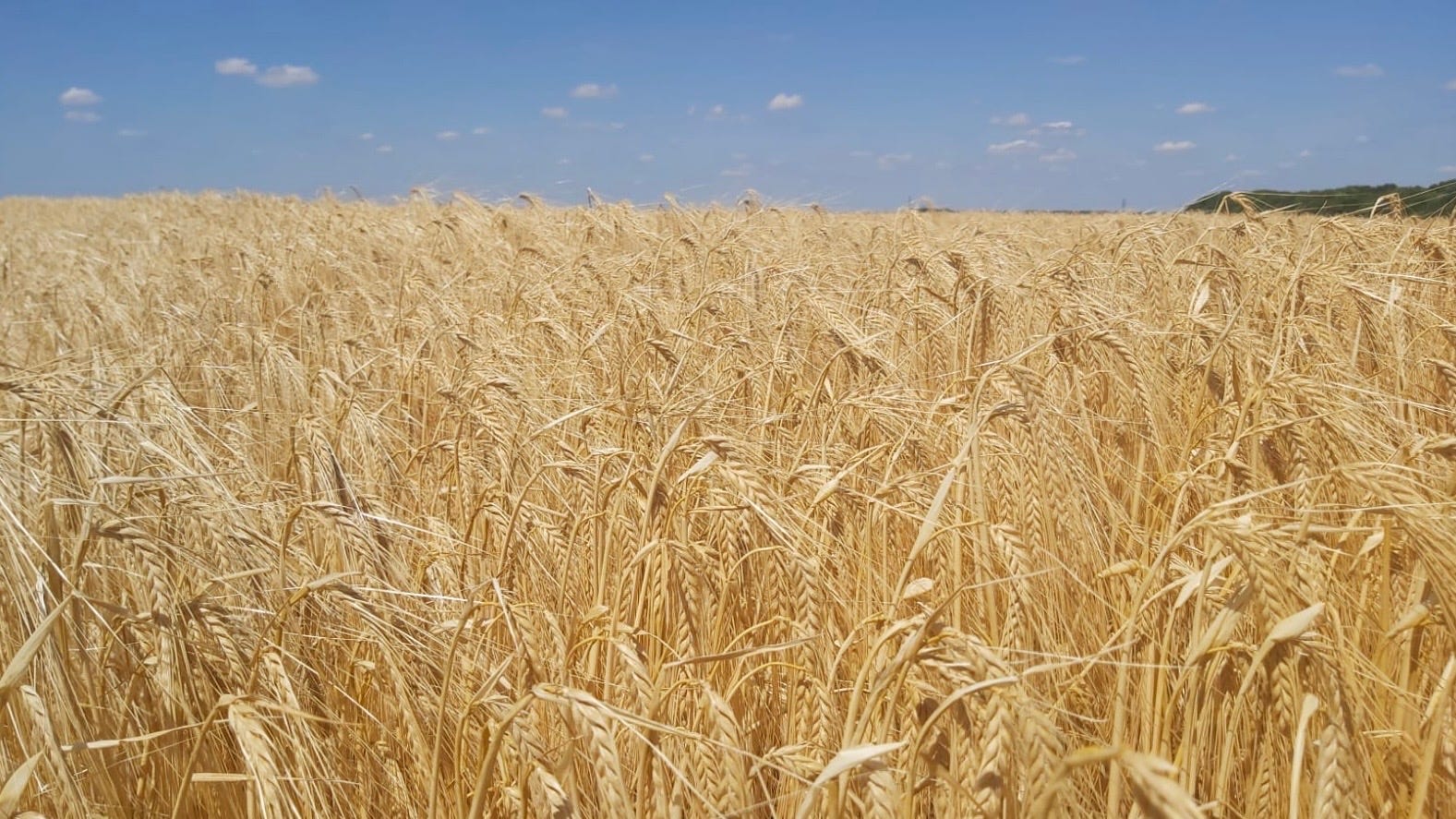
Today, August 1st, is Lammas—an Anglo-Saxon celebration marking the start of the harvest season. Its name comes from hlaf-mas, meaning “loaf-mass.” A good harvest was a matter of survival, and the first new grain of the year would be baked into bread and blessed in church.
Its memory is preserved in Lammas Land, one of Cambridge’s cherished public green spaces.
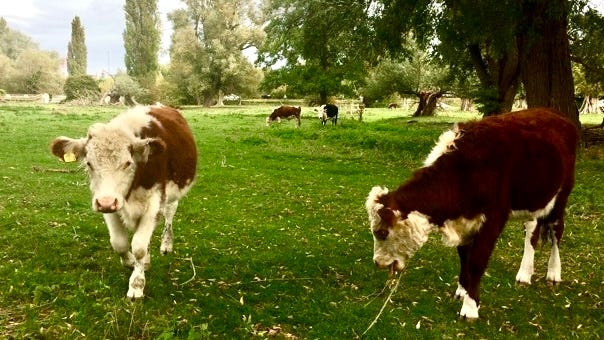
Uniquely for a UK city, cattle still graze freely here and on other commons during the summer months—an echo of rural traditions linked to Lammas that predate the nearby shops, lecture halls and laboratories.
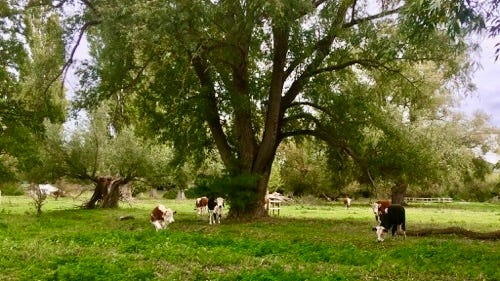
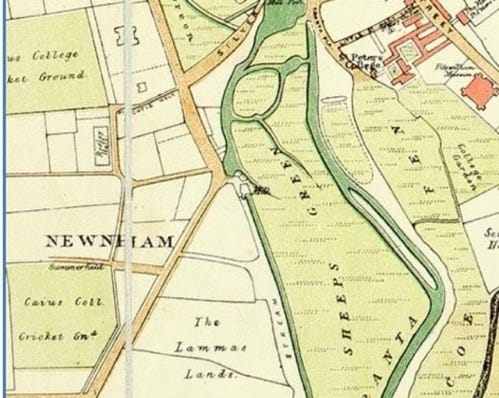
For centuries, Lammas Land was a marshy stretch beside the River Cam, outside the old city boundary, before it absorbed the then-hamlet of Newnham. Cambridge’s ‘commoners’ were entitled to pasture their animals here after harvest time. These were known as Lammas rights.
Elsewhere, in towns like Huntingdon, such lands and rights were lost—erased by the pressures of enclosure, sold off and fenced in, absorbed into private ownership and built over as time passed. But Cambridge resisted.
Lammas Land and its grazing rights were guarded from development as the city grew. It survives as a fragment of the past, older than the colleges, but still contributing to life in a city where the focus is on the future.
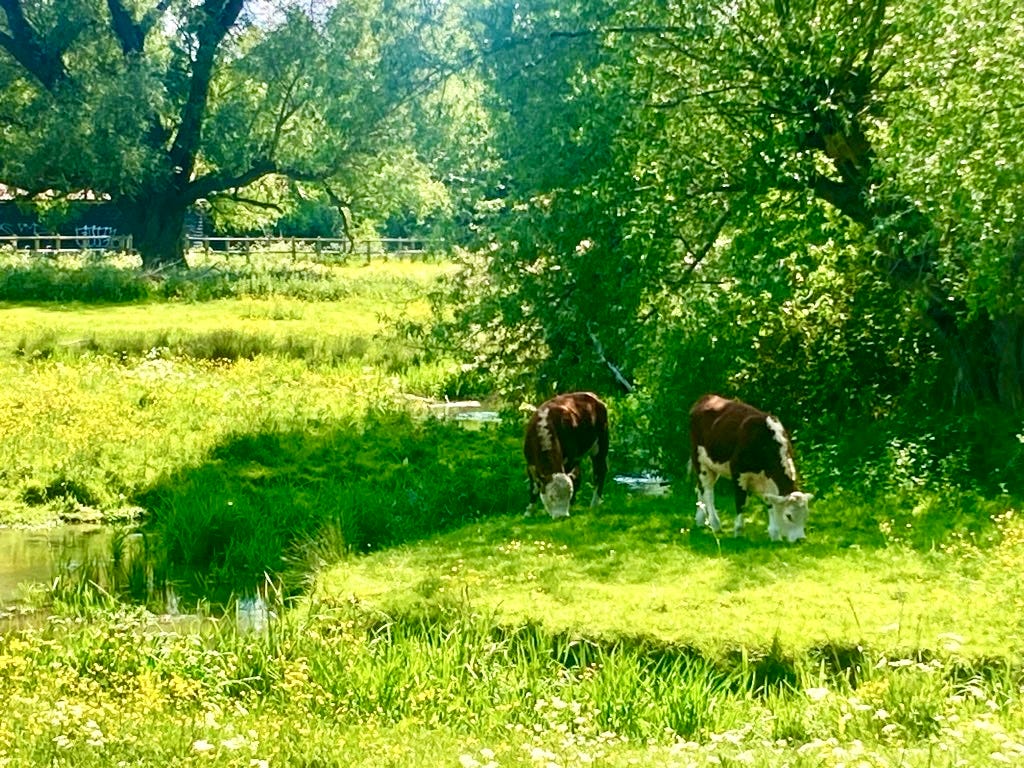
The ‘Cambridge cows’ aren’t just something tourists take photos of. They helped make the city.